Published in The House Magazine on 03 September 2026.
THE ADVENT OF ANDY BURNHAM has put a spring into Labour’s step, and into the party’s poll ratings. Soon after he entered Number 10, Labour found themselves ahead in a succession of surveys for the first time in more than eighteen months – largely a result of their disgruntled 2024 voters returning cautiously to the fold. Whether the bounce will last is another question. But how much can the polls tell us about what is really going on?
Voting intention surveys are not a precision tool, especially at this stage of the game. Several recent polls have put Labour, Reform UK and the Conservatives within three or four points of each other. Given the margin of error (which generally means that, depending on the sample size, there is a 95 per cent chance that a party’s vote share is within two or three points of what the poll claims), this amounts to a statistical tie. In such a scenario is meaningless to pore over such tiny differences in vote share – not that this stops people in the political world who ought to know better.
Most voting intention surveys ask people which party they would pick in an election tomorrow. My approach is different. I ask how likely people think they are, on a scale from zero to one hundred, to vote for each party at the next election when it comes. Those giving one party a score of 50 or more are counted as a voter for that party, weighted by their stated likelihood to turn out and vote.
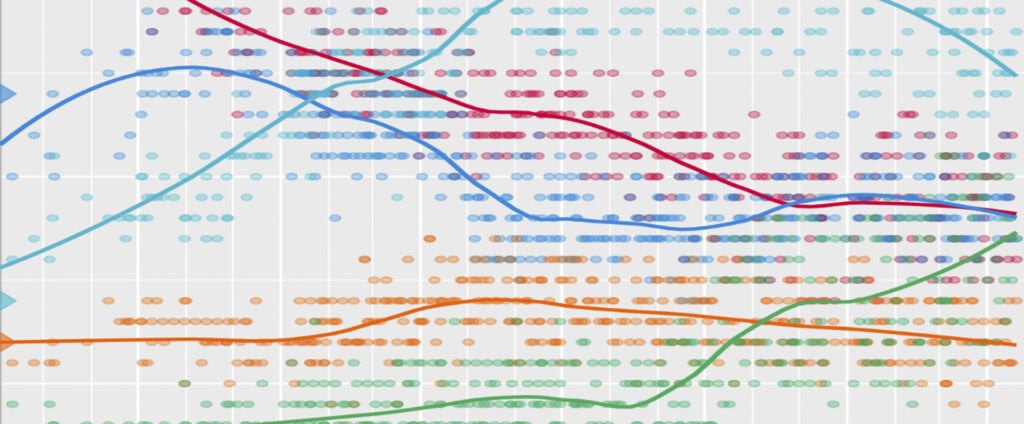
This method has produced a similar pattern to other polls, but with some notable nuances. Last October, I found a nine-point lead for Reform; from the autumn on, in common with other pollsters, I found the gap narrowing. Overall, though, I have tended to find Reform a few points lower than other researchers, and my March survey was the first this year to find a tie.
That is not to say my colleagues in the polling business are doing it wrong: asking people to choose a party is a perfectly valid way to take a snapshot of voter sentiment. My alternative offers a slightly different perspective – including the relative enthusiasm of each party’s supporters and in which direction they might be tempted away.
But why should my question produce different results? I think it’s because I’m asking people to think about their vote in a different way. It is one thing to say that things are so bad that if there were an election tomorrow you would jolly well vote Reform; perhaps it is another to reflect on the chances that you might do so in two or three years’ time at a real election, rather than a hypothetical one – and which other parties you might consider too. Could it be that prompting people in this way helps to presage movements that only later become more widely apparent?
While voting intention numbers make easy headlines they are, in my view, the least meaningful part of any political survey. More significant are what different kinds of voters say about their priorities, about issues and policies, and their opinions – especially their doubts – about parties and their leaders. Voting intentions are a product of these views, not the other way round.
While the numbers are a useful guide, they only tell you so much. This is why we spend so much time going round the country listening to people talk about politics in their own words. My first round of focus groups after the Burnham takeover confirmed the new PM’s confident start, but found that even those who like him and wish him well wonder how he will address the things they care about and how he (or more to the point, they) will pay for it all. And that many of them have no idea how they will end up voting.
DOWNLOAD PDF