Published in the Daily Express on 11 November 2026.
The monarch gave his name to one of our most prestigious gallantry medals… and showed his own valour in battle.
He is best known as the reluctant king with a terrible stammer who stepped into the breach when Edward VIII abdicated. George VI summarised the immense pressure of his unexpected accession in a letter to his older brother, saying that he had inherited “a rocking throne” and was trying “to make it steady again”. Although George VI only ruled for little more than a decade and a half, these were key years for the future of the monarchy, particularly as his short reign, from late 1936 to early 1952, coincided with the six-year period of WWII.
It is widely known that the King created two of Britain and the Commonwealth’s most prestigious gallantry medals, the George Cross and the George Medal. However, the full story of George VI’s passion for bravery has never been told, not even by his official biographer. To mark Armistice Day, I intend to detail the late King’s commitment to championing valour both through his own private medal collection and his many ways of recognising the courage of individuals and nations, particularly during the 1939-45 war.
Prince Albert Frederick Arthur George was born on the Sandringham estate in Norfolk on December 14, 1895, during the reign of his great-grandmother, Queen Victoria. Known affectionately to his family as “Bertie,” he was a shy, sensitive boy who, as a young man, had courted and then married Lady Elizabeth Bowes-Lyons in 1923. They had two daughters, “Lilibet”, the future Elizabeth II, and Margaret.
His life changed dramatically when he first became King on December 11, 1936, three days before his 41st birthday. Within less than three years too, Britain was at war following Neville Chamberlain’s disastrous policy of trying to appease Hitler.
As King, he chose to be known by his fourth given name to honour his father, George V. He also wanted to distance the monarchy from the chaos surrounding the abdication of Edward VIII so that he could marry an American divorcee, Wallis Simpson.
By this point, George VI had military experience of his own. He had been a naval cadet prior to the Great War of 1914-18 and during the war had been mentioned in Despatches for his courage as a turret officer on HMS Collingwood during the Battle of Jutland in 1916. In the final year of the war, he transferred from the Royal Navy to the newly-formed RAF, being promoted to squadron leader in 1919.
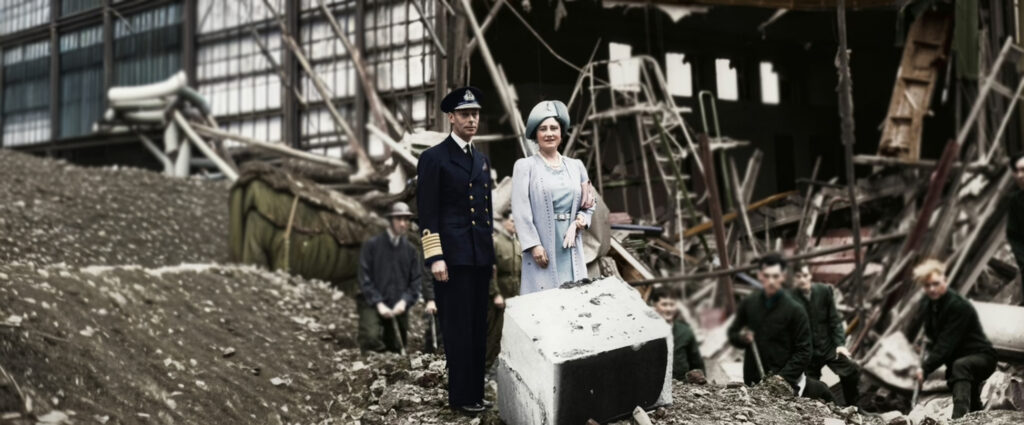
George VI and his wife led by example during the Second World War. At the start of the Blitz in 1940, they were offered the chance to leave Britain for the safety of Canada. They declined, insisting on remaining at Buckingham Palace at the height of the bombings, although some nights were spent at nearby Windsor Castle.
The first night of the Blitz on London, so-called “Black Saturday” on September 7, 1940, killed an estimated 2,000 civilians, mostly living in the East End. On September 13, the King and Queen narrowly avoided death when two German bombs exploded in a courtyard at Buckingham Palace while they were there. The Queen later said: “I am glad we have been bombed. It makes me feel we can look the East End in the face.”
The King was quick to praise the courage of those who survived the bombings: “It is not the walls that make the city, but the people who live within them. The walls of London may be battered, but the spirit of the Londoner stands resolute and undismayed.”
Little more than a week after their near miss, the King, after much consideration, created both the George Cross (GC) and the George Medal (GM) for bravery not in the presence of the enemy, including bomb disposal experts and members of the various auxiliary units on the home front.
As the King’s official biographer John Wheeler-Bennett wrote: “The study of decorations and his collection of medals and ribbons at Windsor was among the most complete in the world. The planning of the George Cross and Medal was therefore of particular interest to him, and the final design was almost entirely his own work.”
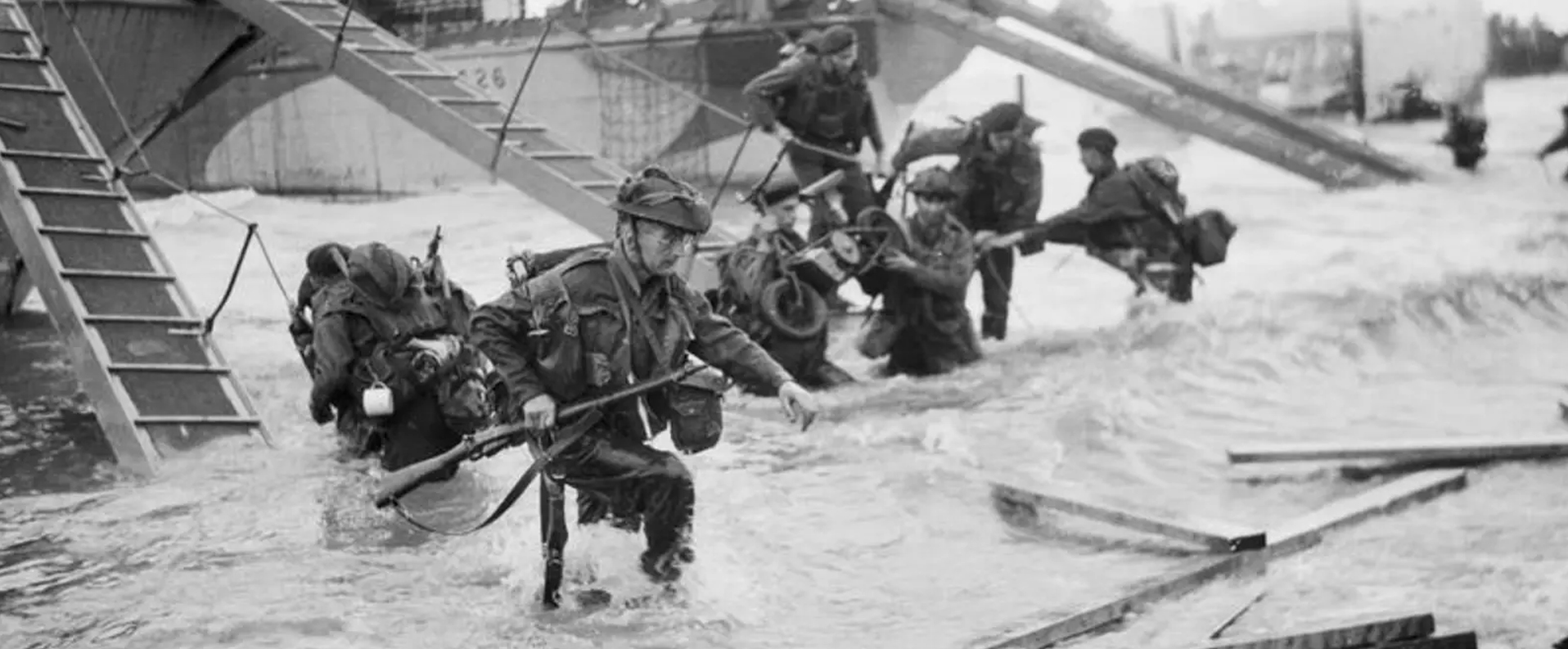
Throughout the war, George VI and Elizabeth provided morale-boosting visits throughout the United Kingdom, visiting bomb sites, munitions factories, and troops. The King also visited servicemen in France, North Africa, Malta, Italy and the Low Countries. In fact, he was in northern France just ten days after the famous D-Day landings of June 6 1944.
The King was always keen to recognise acts of great bravery. He bestowed the first-ever collective GC on the “fortress island of Malta” in 1943 after the islanders underwent countless bombing raids and desperate food shortages rather than surrender to their German and Italian enemies. As John Wheeler-Bennett noted, “His Majesty had taken a deep interest in every phase of the island’s ordeal.”
The King also sent a message to The Governor of Malta on April 15, 1943 saying: “To honour her brave people I award the George Cross to the Island Fortress of Malta to bear witness to a heroism and devotion to duty that will long be famous in history.”
George VI was equally keen to recognise the courage of foreign Allied personnel. On February 2, 1943, after one of the most brutal battles ever fought, the Germans surrendered at Stalingrad and 90,000 German troops were taken prisoner. The King wanted to bestow an award on the victorious Russians, eventually settling on an engraved ceremonial “Sword of Honour” on the people of the Soviet Union for their “heroic qualities and magnificent leadership”.
The Windsors shared the deprivations of their people throughout the war. They lived on rations and their home remained boarded-up and unheated. They also suffered a loss when the Duke of Kent – the youngest of the King’s brothers – was killed on active service in August 1942.
During the Victory in Europe celebrations of 1939, the crowds outside Buckingham Palace chanted, “We want the King.” The King, in turn, invited Winston Churchill, the war-time Prime Minister, to appear next to him on the balcony.
It was during the post-war years, including when he was ill with cancer, that George VI, quietly built up his personal collection of gallantry and service medals – items which to this day remain in the Royal Collection.
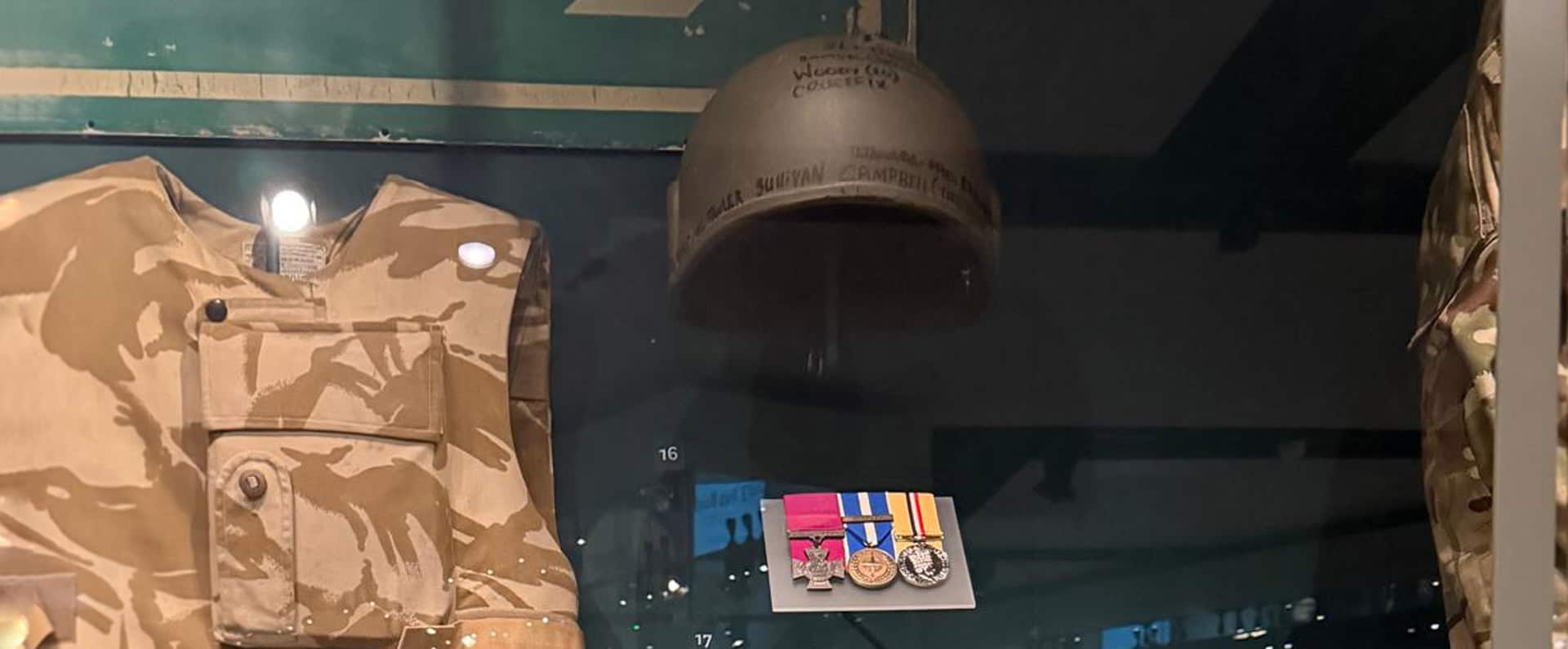
As I revealed in Saturday’s paper, the King purchased the first ever VC to be gazetted – or officially announced – in January 1951 from Spink & Son, the London dealers.
I have established that George VI assembled several other medals in his collection. They included an early design of the VC from March 19, 1856, a specimen Baltic Medal and a specimen Crimea Medal, both from the same year. His passion for medals and other relevant memorabilia stayed with him until his death.
The King had long been a heavy smoker and the pressure of being a monarch during the world’s biggest war took a toll on his health. The King failed to recover from an operation for his lung cancer, and he died in his sleep on February 6, 1952 at Sandringham, aged 56.
After lying in state at Westminster Hall, the King’s funeral was held at St George’s Chapel, Windsor, where he lies buried. At the King’s funeral, attached to the Government’s floral wreath was a card on which Winston Churchill had written the two words which are inscribed on the VC, “For Valour”.
It was a touching and appropriate gesture. For, in my view, no living monarch has ever done more to recognise the value of gallantry and to champion the bravery of VC and GC recipients, men and women whom I like to refer to as “the bravest of the brave”.
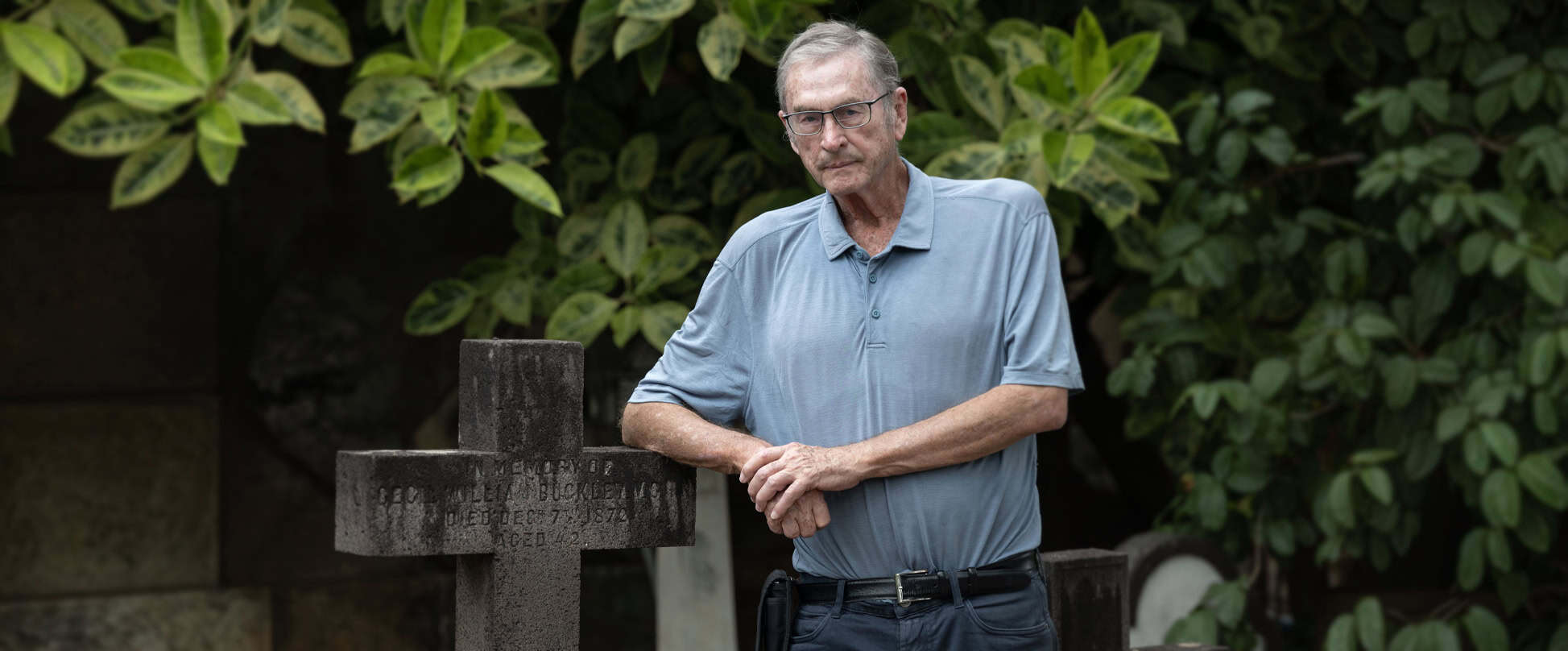
As someone who also has a long passion for bravery, including building the world’s largest collection of VCs, now 245 in total, I am in awe of George VI’s pioneering work in this field.
George VI left an important legacy too – not just the GC and GM which are still awarded to this day but a strong message, loyally adhered to by both his daughter, Queen Elizabeth II, and his grandson, King Charles III, that recognising acts of great gallantry, both collectively and by individuals, is a vital role for the modern-day monarch.
Read this article on Express.co.uk
DOWNLOAD PDF