Published in Medal News in August 2026.
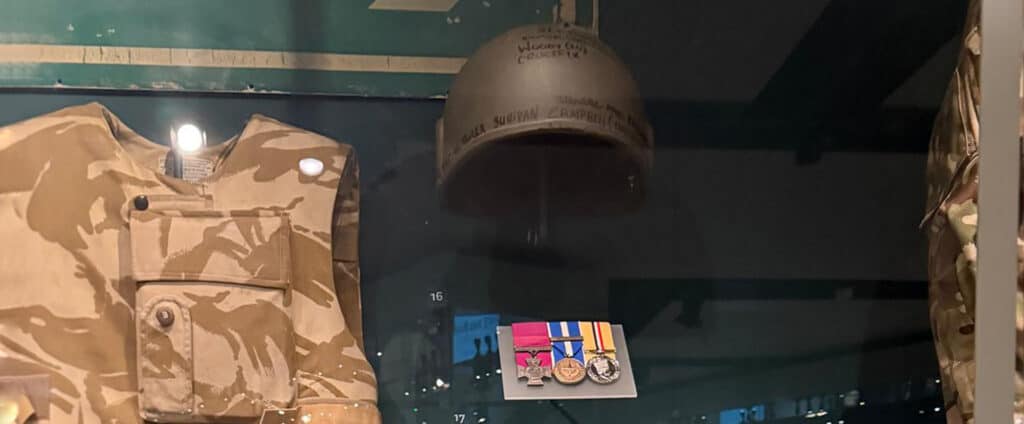
IT has given me great pleasure that some of my Collection of Victoria Cross (VC) and George Cross (GC) gallantry medals have gone on display at the National Army Museum (NAM) for the first time. In due course, the entire collection—the largest of its kind in the world—will be exhibited at this splendid venue in central London.
A small number of VCs and GCs from my Collection went on show to mark an event at the Museum in June, held in partnership with the Victoria Cross and George Cross Association, entitled “Stories of Valour: Victoria Cross and George Cross”.
Until September last year, my Collection of VCs and GCs had been on display for 15 years at the Lord Ashcroft Gallery at the Imperial War Museum in south-east London. That was until the “Imperial Woke Museum”, as it has been renamed by some, decided to close my gallery in order to devote more space to highlighting the causes of the LGBT+ community and other diversity issues.
Courage is the first of human qualities because it’s the quality which guarantees the others.
Call me traditional or old-fashioned if you like, but I would have thought an institution called the “Imperial War Museum” would have been better championing the valour of our VC and GC recipients, men and women whom I like to refer to as the “bravest of the brave”.
Thank goodness for the NAM, which is now the best place in London to visit for anyone who believes, like me, that bravery is one of the greatest human qualities that any man or woman can display, and that we, therefore, need to highlight such virtues far and wide.
Aristotle, one of the world’s greatest philosophers, said as long ago as the 4th century BC:
“Courage is the first of human qualities because it’s the quality which guarantees the others.”
Nearly two and a half thousand years later, it was the great wartime Prime Minister Winston Churchill who effectively echoed the words when he said: “Without courage, all other virtues lose their meaning.”
Unfortunately, I was abroad and unable to attend the June 12 evening at the NAM. The event was hosted by Museum Director Brigadier (Retired) Justin Maciejewski, DSO, MBE, who has commanded soldiers on military operations, witnessed courage in action and has recommended soldiers for public recognition.
The guest speakers were Warrant Officer Class 1 Johnson Beharry, VC, COG, Chris Finney, GC, and Dominic Troulan, GC, QGM, who explored what it means to be a VC and GC recipient, as well as explaining the remarkable stories behind their decorations.
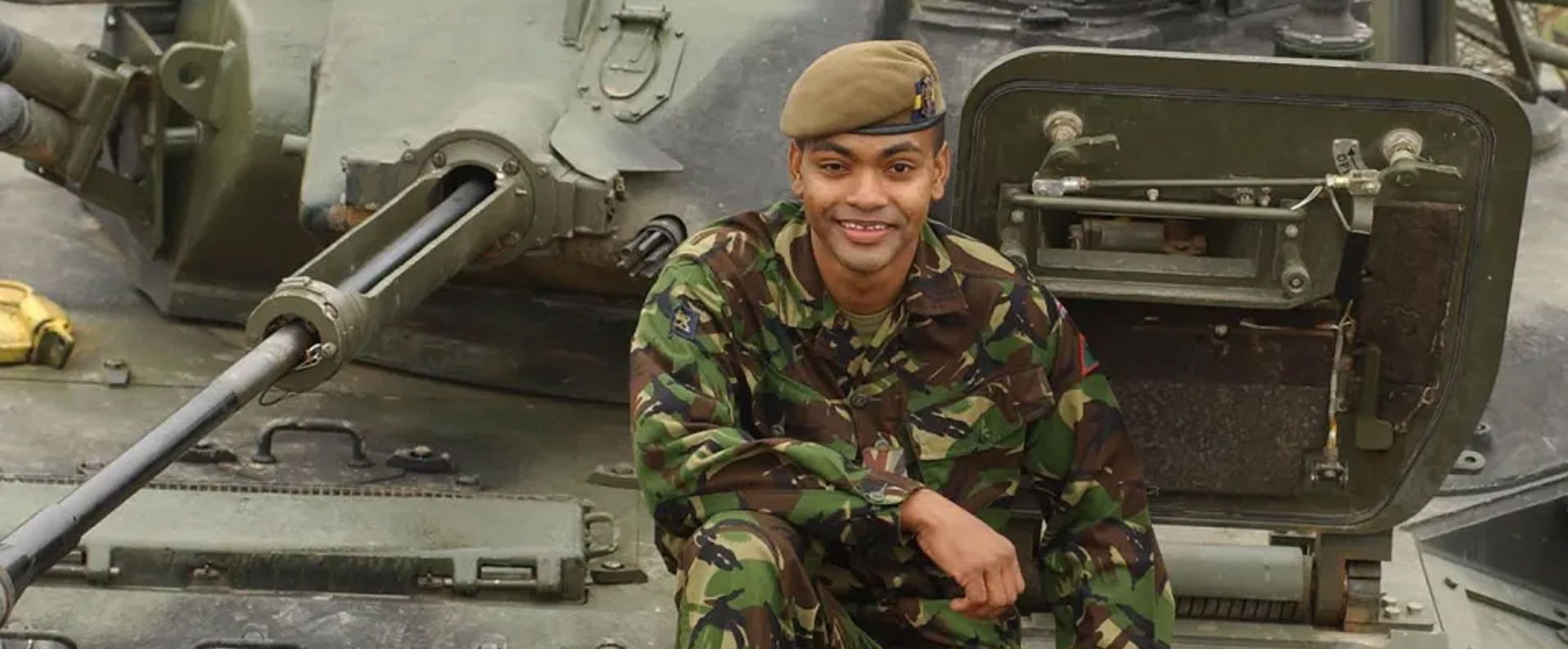
WO1 Beharry told an audience of some 100 guests that he was awarded the VC for two separate acts of bravery during ambushes in southern Iraq in 2004. On both occasions, he was driving a Warrior armoured vehicle under intense enemy fire when he was serving in the rank of private.
During the second attack, a rocket-propelled grenade exploded just inches from his head, leaving him with devastating injuries. Despite this, he continued driving his badly damaged vehicle to safety before finally collapsing. More than two decades later, Beharry is still serving in his Regiment but he suffers from both physical and mental health issues linked to his injuries.
Chris Finney, who is no longer serving, received his GC for a “friendly fire” incident near the Shatt al-Arab waterway, north of Basra, Iraq, in 2003 when an American A-10 ground-attack aircraft mistakenly targeted British armoured vehicles.
Although wounded himself, Finney, who was an 18-year-old trooper in the Household Cavalry Regiment at the time, repeatedly ran into burning vehicles to rescue trapped comrades. Because the danger came from Allied aircraft rather than enemy forces, he did not qualify for a VC. Instead, he received the GC.
Without courage, all other virtues lose their meaning
The third decorated hero at the NAM last month was Dominic Troulan, who earned his GC after al-Qaeda-linked terrorists stormed the Westgate shopping centre in Nairobi, Kenya, in 2013, killing 71 people and injuring 200 more. Troulan, who was living in Kenya at the time, repeatedly entered the shopping complex to rescue civilians trapped by the attackers.
For hours, he co-ordinated evacuations and guided terrified families to safety despite a constant fire from the terrorists. Troulan became the first civilian recipient of the GC for 25 years. As a sergeant in the Royal Marines, he had already been awarded the Queen’s Gallantry Medal for brave actions in Northern Ireland before being commissioned and eventually retiring in the rank of major in 2009.
As I have indicated, I am thrilled that the NAM has started exhibiting part of my Collection of VCs and GCs for the first time. Over the next two years, my entire Collection—245 VCs and a smaller number of GCs—will go on display at the Museum.
My VC and GC Collection is valued at around £70,000,000 and I had made arrangements to gift it to the IWM when I died. All that changed when I discovered, through an intermediary, that the IWM had decided to close the Lord Ashcroft Gallery to create space for other exhibitions.
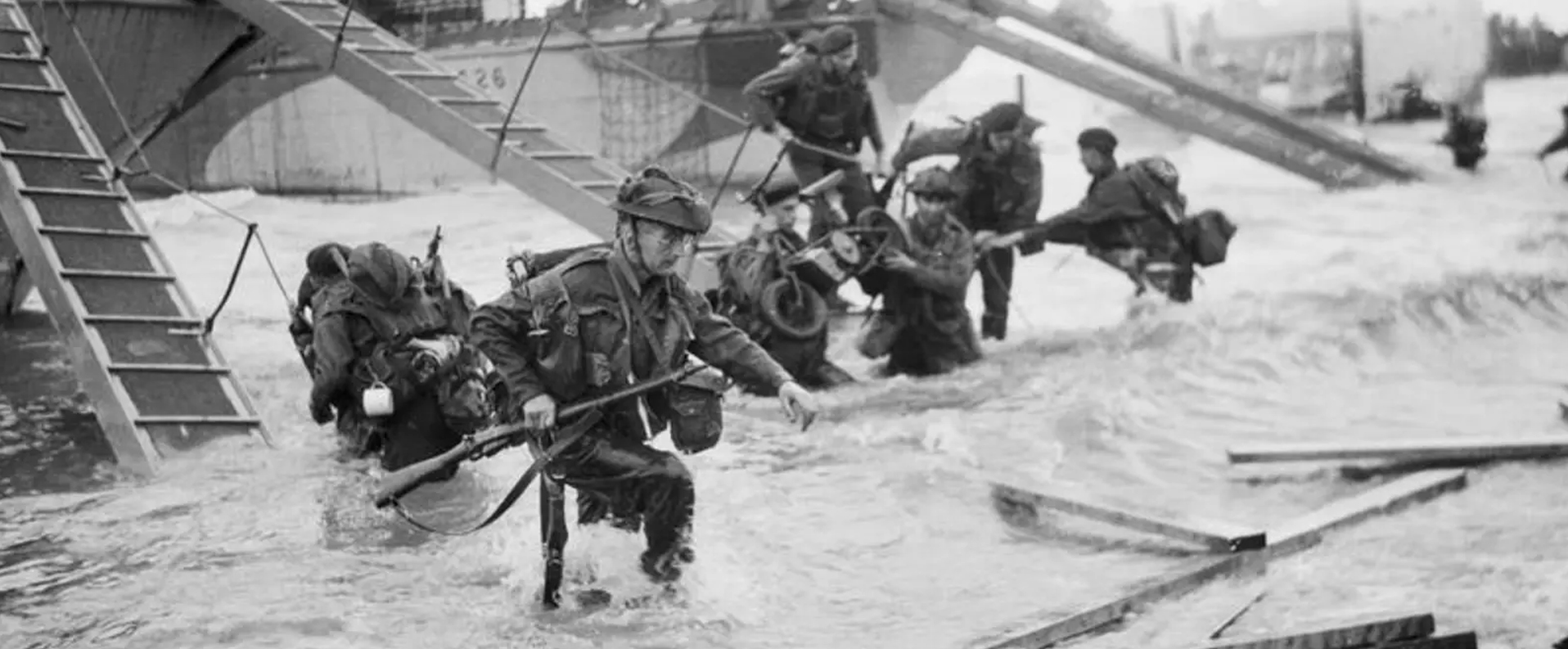
My passion for courage dates back to when I was a small boy and my late father, Eric Ashcroft, told me about his experiences as a young officer landing on Sword Beach during the D-Day Landings of June 6, 1944—an event that changed the course of the Second World War.
I have been learning more about courage ever since, never more so than over the past four years of the all-out Ukraine-Russian War; I have visited Ukraine 15 times, including several visits to the frontline.
It was there, near the frontline city of Slovyansk, that I met Brigadier-General Denys Prokopenko, now the Commander of the First Corps Azov. As the hero of the siege of Mariupol early in the all-out war, he helped me understand how important it is to have the moral high ground as a soldier in a wartime situation.
Known widely by his callsign of “Redis”, he explained to me the inspiration for him being able to fight Russians for well over a decade, since the invading nation seized Crimea and other land in the east of Ukraine:
“My motivation will not fade until victory over the world of evil has been achieved,” he said. “It is always easier to fight on your own land, for Ukrainian values, for your people and cities, than for the occupation forces. Unlike them, we know what we are going into battle for.”
Everyone has their own source of inspiration
Brigadier-General Prokopenko is following in the footsteps of his great-grandfather who also fought the Russians in the Soviet-Finnish war:
“Everyone has their own source of inspiration. For most, it is preserving the territorial integrity and sovereignty of our country. Personally, I will defend the independence of my country at any cost. I do not deny that my motivation is blood revenge, and at the same time it is fuel for continuing the path that I have chosen. If a person is obsessed by purpose, he does not need motivation.”
As an island, Britain has developed its own laws, traditions and customs but it is also a huge champion of the value of courage. It was Queen Victoria who instituted the VC in 1856 and today it remains the premier decoration in Britain and the Commonwealth for gallantry in the presence of the enemy.
George VI instituted the George Cross in 1940 during the Blitz, early in the Second World War, and today it remains the most prestigious decoration in Britain and the Commonwealth for gallantry not in the presence of the enemy. It was originally intended as mainly a civilian bravery award but, in fact, the GC has been awarded to numerous members of the Armed Forces for outstanding courage, including bomb disposal work.
All living holders of the VC and GC continue to be superbly represented by the Victoria Cross and George Cross Association. In fact, the Association is chaired by Chris Finney, one of the three heroes at the NAM evening in June.
I began my Collection of VCs in 1986 when I purchased a single VC at auction. Today, the Collection includes the medal group awarded to Captain Noel Chavasse, VC & Bar, MC, a medical officer who served and was killed during the Great War. He was the only VC and Bar of the Great War and one of only three in the entire history of the award.
Following the closure of the Lord Ashcroft Gallery, and as a temporary measure, I made the Collection accessible digitally through a website. My new partnership with the NAM means that soon the public can enjoy the entire Collection once again and learn about the stories of truly exceptional courage that accompany the medals.
DOWNLOAD PDF