Published in the Daily Express on Saturday 07 November 2026.
Ahead of Remembrance Sunday, Lord Ashcroft reveals the extraordinary story behind the first VC to be announced officially.
Outside Holy Trinity Church on the island of Madeira, more than 300 miles off the coast of north-west Africa, there is a plaque that commemorates the bravery of a 19th-century British sailor. The inscription at the church in the capital, Funchal, rightly states that Captain Cecil William Buckley VC was the recipient of “The First Victoria Cross to be announced in The London Gazette 24 Feb 1857”. The London Gazette is the official journal of record for the British Government.
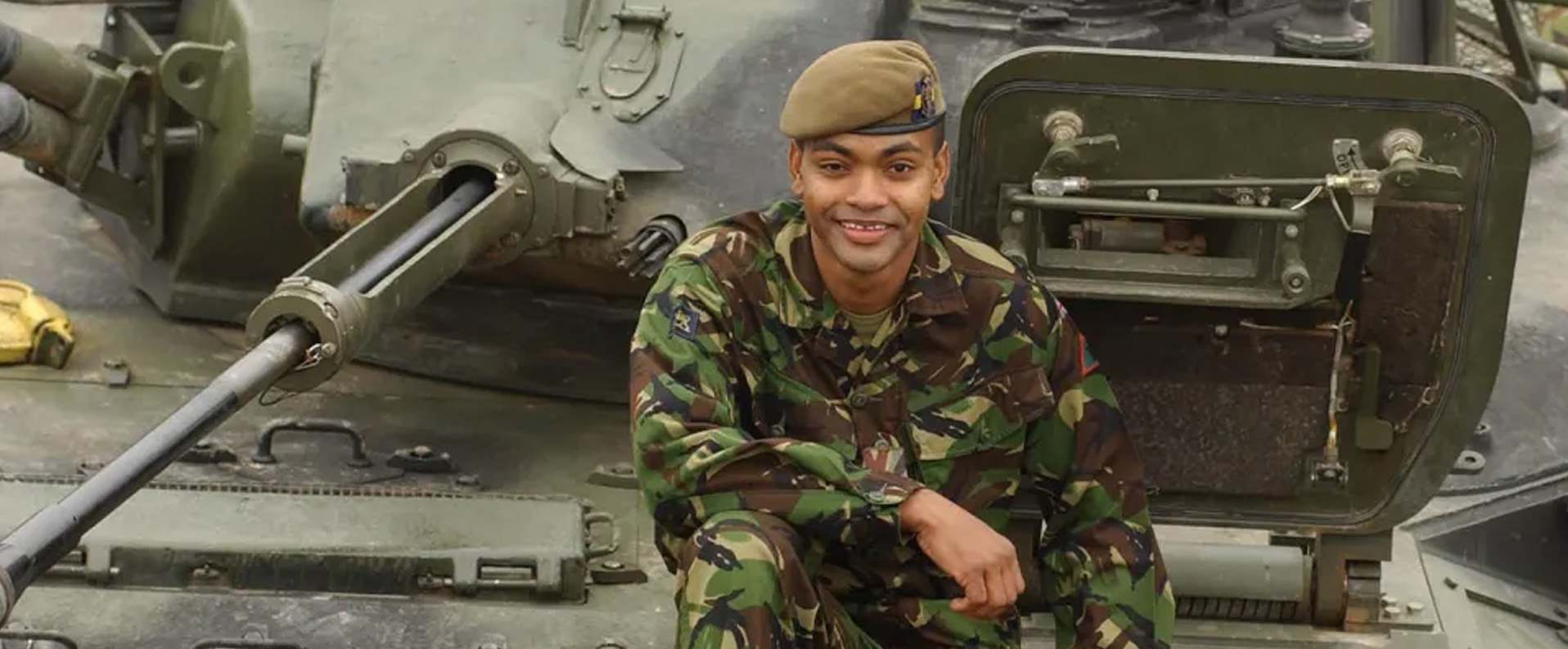
However, the plaque, unveiled in February 2007 by Warrant Officer Johnson Beharry, also a recipient of the Victoria Cross, only tells half the story. For I can reveal that the sailor’s medal group was secretly purchased 75 years ago by the reigning monarch, George VI, to preserve it for the nation. At the time of the purchase, the King, for reasons of his own, chose not to disclose that he had bought the medal group. Even his official biography published in 1958 – six years after his death – makes no mention of the purchase.
Ahead of Remembrance Sunday, I want to share the full account of Buckley’s daring exploits, his relatively short life and the extraordinary story of how this famous medal group ended up being bought by George VI for the nation.
Cecil William Buckley was born on October 7, 1830. He was the son of Joseph Buckley and his wife Mary (née Entwhistle), although there is debate about whether he was born in Lancashire or Somerset. Little is known about his early life but he joined the Royal Navy in 1843, aged just 13. Over the next decade, he served in several ships, sailing to North America and South America, including being involved in intercepting slave ships from West Africa. In July 1850, he was commended for his role in an assault on a fort at the mouth of a river in Brazil.
By 1854, Britain and France were fighting Russia in the Crimean War that would last for a further two years. By the time the Crimean War broke out, Buckley – usually known by his second Christian name of William – was serving in the rank of lieutenant and in HMS Miranda, a 14-gun warship. In May 1855, a large British and French naval force, including Miranda, sailed for the Sea of Azov with some 15,000 Allied infantry. Their aim was to destroy the enemy’s fortifications at the Kerch Strait and then sail on to disrupt Russian supply lines.
During this time, the Royal Navy was experimenting with early Special Forces commando-style operations after deciding it could be more effective to land small raiding parties on Russian-controlled islands rather than mount a full-scale attack. On May 29, Lieutenant Buckley and two other volunteers landed by small boat and set fire to Russian stores in the town of Genitchi. In the citation for Buckley’s VC, Admiral Lord Lyons reported: “This very dangerous service they most gallantly performed, narrowly escaping the Cossacks, who all but cut them off from their boat.”
In the citation, Lord Lyons also detailed Buckley’s second act of courage, which took place five days later on June 3.
“The second volunteer service was performed while the town of Taganrog was being bombarded by the boats of the Fleet: ‘Lieutenant Cecil Buckley, in a four-oared gig, accompanied by Mr Henry Cooper, Boatswain, and manned by volunteers, repeatedly landed and fired the different stores and Government buildings. This dangerous, not to say desperate service (carried out in a town containing upwards of 3,000 troops, constantly endeavouring to prevent it, and only checked by the fire of the boats’ guns), was most effectually performed’.”
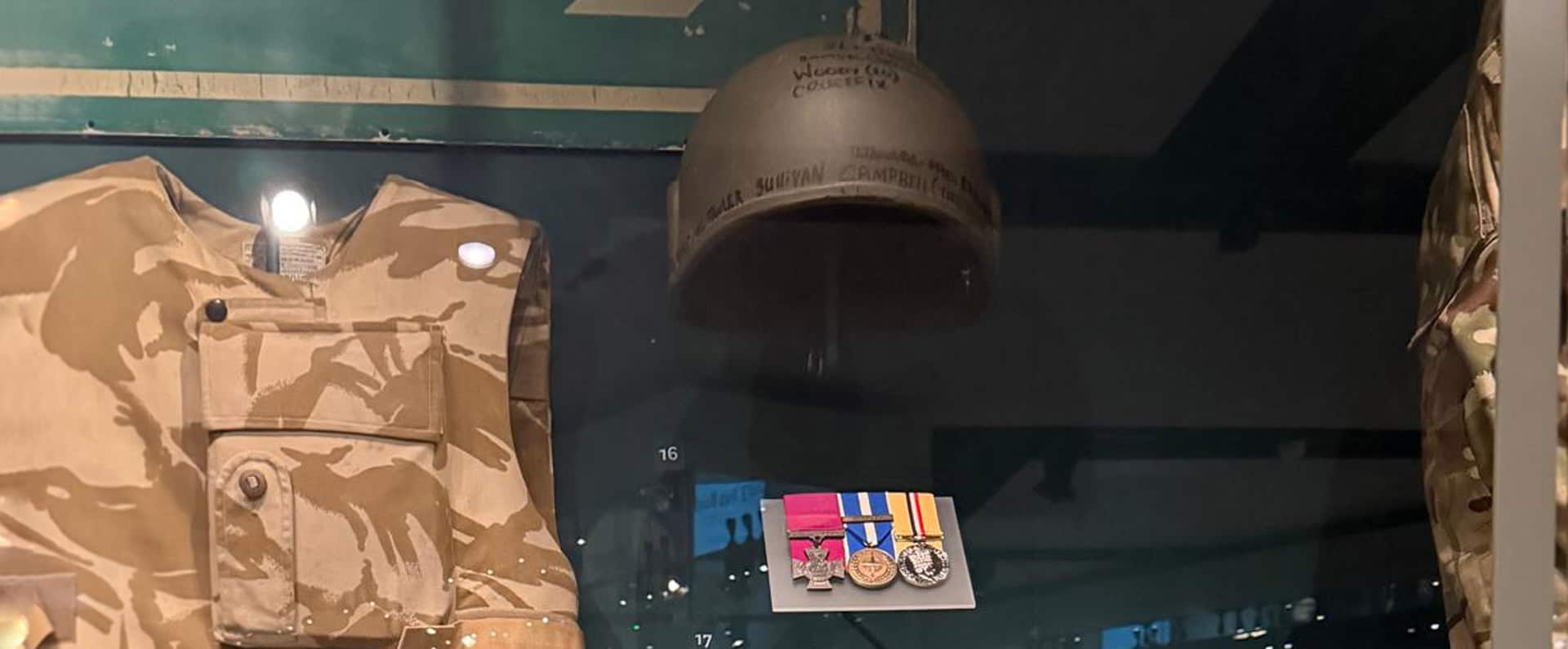
The Victoria Cross was officially instituted by the Queen seven months later on January 29, 1856, to reward acts of great bravery during the Crimean War when soldiers and sailors had to endure the harshest of conditions, particularly in winter. To this day, the VC remains Britain and the Commonwealth’s most prestigious gallantry award for valour in the presence of the enemy.
As stated, the first of four VC awards was announced in The London Gazette just over a year later to Buckley, who had gone on to be Mentioned in Despatches for further bravery in the Crimean War. This was while commanding the six-gun HMS Snake and when it was involved in operations in the Kerch Strait. His VC investiture was conducted by Rear Admiral Honourable George Grey in HMS Merlin in February 1858.
After the end of the Crimean War, Buckley went on to serve in and command several naval ships and he was promoted to captain in 1862. However, in 1869, he was censured for neglecting gunnery practice and, the following year, censured again for the tone of his letter to the Board of Admiralty. This led to him being removed from his position of senior officer at Rio de Janeiro and instead posted to the notoriously harsh West Indies.
Buckley retired due to poor health on October 18, 1872, having served in the Royal Navy for 29 years. He had earlier married Catherine Senhouse in Gloucestershire in August 1865 and the couple went on to have two sons and a daughter. Buckley and his family moved to Madeira late in 1872 when they realised he was terminally ill – enabling him to enjoy a kinder climate during his final days. He died on December 7 1872, aged 42.
His widow and children remained on Madeira. His two sons are buried with him, one Frank, having died aged only 14 months in 1873, the other, Percy died in 1899, aged just 31. It is highly likely that Buckley’s medal group – a VC, Baltic Medal, Crimea Medal and other service medals – was inherited by his widow and, at some point, it came into the hands of a private collector.
The group was sold to George VI by London dealers Spink & Co in January 1951 in a private sale. Pierce Noonan, one of Britain’s foremost gallantry medal experts and who is chairman and chief executive officer of Noonans auctioneers in Mayfair, central London, said that the business premises of Spink & Son were at the time situated in St James’s, London, close to both Buckingham Palace and St James’s Palace.
Members of the Royal family, including the King, were known to have utilised their services for advice on matters relating to medals. Mr Noonan told me: “It is likely that at some point, the King was informed that Spink had taken possession of the Buckley medal group. As a medal expert, George VI would have immediately recognised the importance of this VC. The King clearly had a desire to buy it and thereby retain it in safe keeping for the nation.”
A price would have been privately agreed so that the medal group could discreetly become part of the Royal Collection where it remains to this day, managed by the Royal Collection Trust, a registered charity established in 1993 by the late Queen Elizabeth II. Jonathan Pestana-Calvert, the churchwarden at Holy Trinity Church in Funchal, Madeira, said: “We are very proud and honoured to have the plaque commemorating Captain Buckley’s bravery at our church. It does lead to interest from British visitors to our island, some of whom want to see his grave too.”
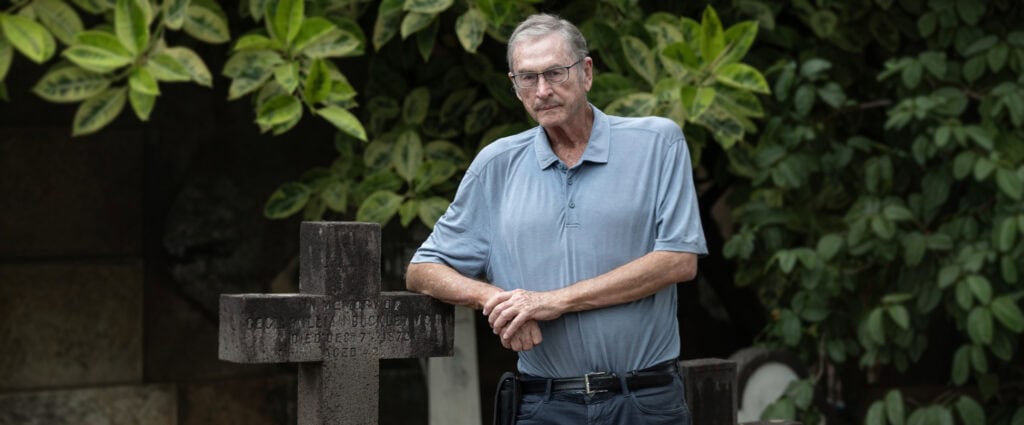
Before leaving Madeira, I visited the cemetery, some 400 yards away from the church, where Buckley is buried so I could pay my respects to this brave sailor. His grave is marked with a simple cross fashioned from the local volcanic rock. To this day, Buckley’s is the only VC awarded to a serviceman that is in the possession of the Royal Family on behalf of the nation. It is a unique Victoria Cross in unique ownership. And for that, we should be grateful for the quiet act of King George VI.
Read this article on Express.co.uk
DOWNLOAD PDF