Published on KyivPost.com and ConservativeHome.com on 24 August 2026.
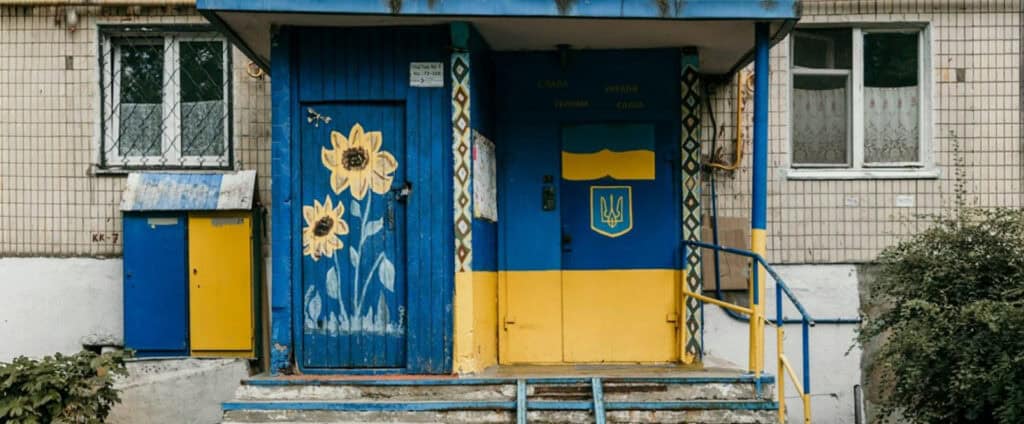
Thirty-five years ago Ukraine won back its independence. For the last five, the country has been fighting to keep it. Ukrainians have shown extraordinary courage to the world – heroism on a scale not seen on the continent since the end of the Second World War. Even then, there was a strong Western alliance, including France, the United Kingdom and the United States, fighting Nazi Germany.
With the war in Ukraine, we are witnessing an unprecedented show of bravery, sacrifice and resilience by one nation, seemingly much weaker than the aggressor on its doorstep. Despite the various coalitions and task forces initiated over the years, and allied material and financial support, Ukraine has still largely been alone in this fight. With assistance coming and going, and without enough conventional capabilities of its own, the will to live has forced the nation to fight not only with might but with ingenuity and inventiveness.
The priority placed on human life on the frontline has pushed Ukraine to start fighting with robots. Aerial, maritime and land drones have increasingly taken over the line of contact and created the so-called ‘kill zone’, bringing about a revolution in warfighting. Ukraine and its warriors have forever changed how humanity will fight wars in the future. The most recent example was displayed in the Middle East, when Russia’s ally Iran began targeting American and allied assets with drones. While fighting a war on its own soil, Ukraine rushed to help by sharing its experience of drone warfare.
The use of drones is breaking new barriers every week. I was privileged enough to witness one of the first drones flown by Ukrainian forces in early 2022 – back then, a repurposed surveillance vehicle. From there, Ukrainian ingenuity transformed standard first-person-view drones from purely reconnaissance tools into loitering munitions and powerful “kamikaze” drones. Ukraine is also developing domestically produced ballistic missiles.
Almost five years into this war, we are witnessing Ukraine targeting assets deep inside Russia, going after airfields, oil refineries, supply lines and military and commercial warehouses. Its recent campaign against the “Russian Amazon”, Wildberries, has targeted around 20 facilities and reportedly put seven of its ten largest logistics centres out of operation – an effective way to bring the war home to a Russian population that continues to remain oblivious to the tragedy they are sowing in Ukraine and beyond.
And tragedy it is. Besides estimated Russian casualties approaching one and a half million and the losses suffered by hundreds of thousands of Ukrainian fighters, Ukrainian civilians are coming under terrorist attacks every day. Following the strategy of a bully frustrated by its failure to achieve its goals on the battlefield, Russia has increasingly resorted to targeting civilians.
Every day, we hear reports of civilians being killed by Russian missiles and drones. Since America stopped providing Ukraine with enough Patriot interceptors – the principal defence against Russian ballistic missiles – because they were also needed for the war with Iran, those casualties have increased substantially. I specifically remember one morning in early August when I woke to the news of dozens of casualties in Kyiv after none of the 27 missiles fired at the city had been intercepted. It is on mornings like those that your heart stops for a second, from the deepest sense of regret and anger at those who have the power to stop this and yet do not.
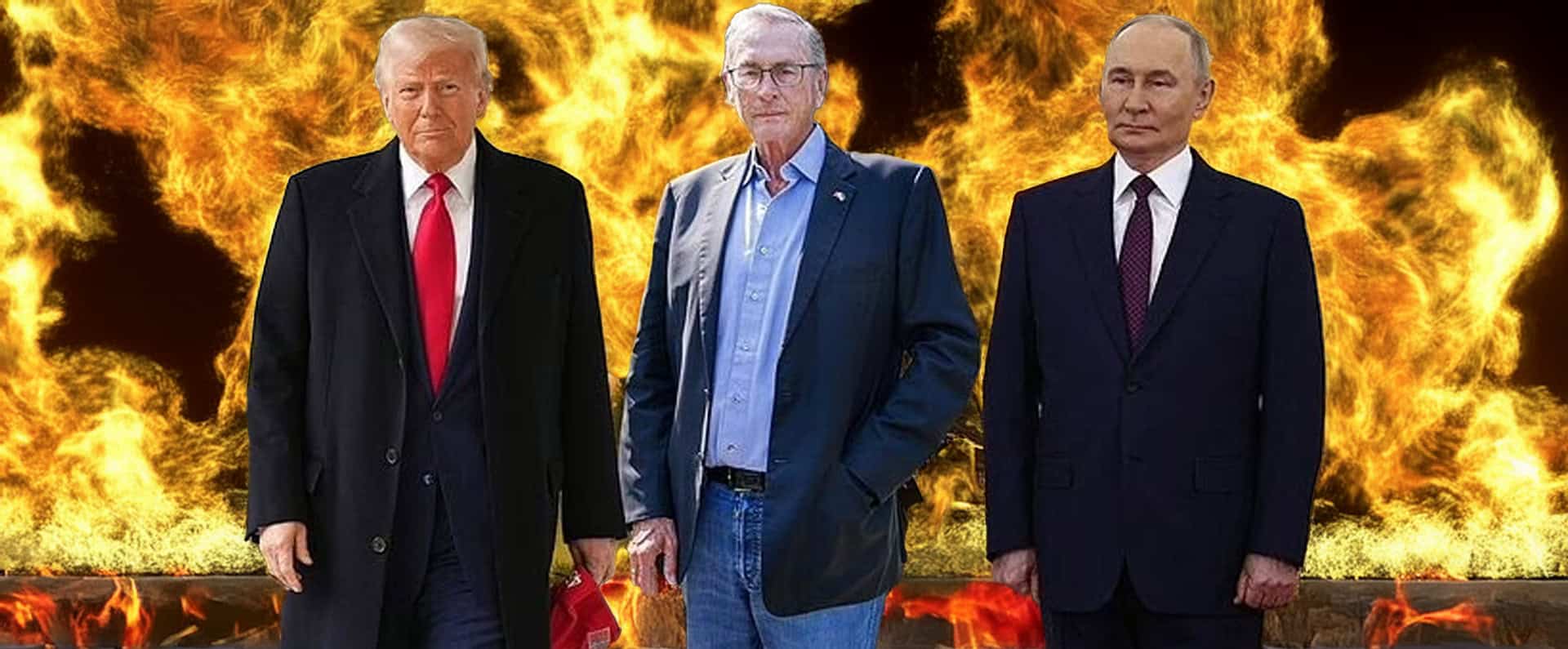
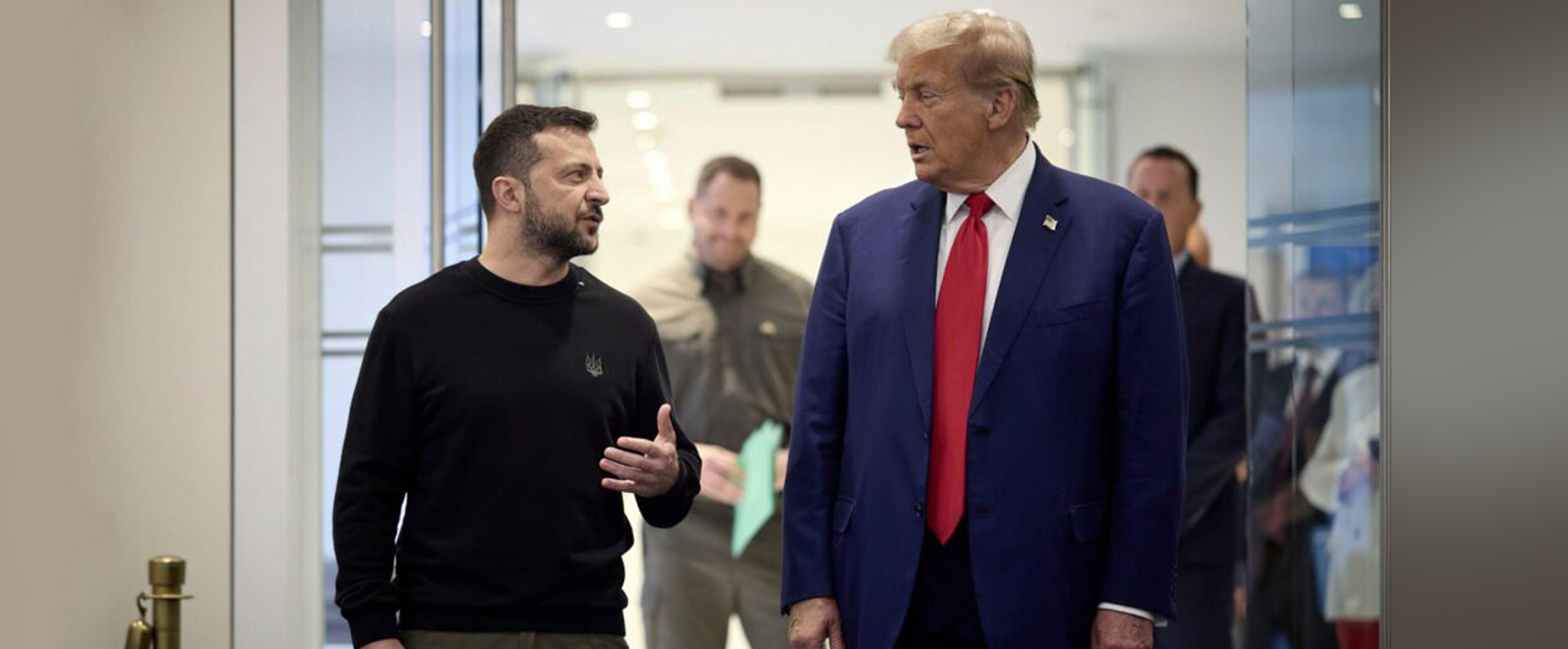
The US administration came into office in January 2025 with great bravado. After countless failed attempts to negotiate with Putin, do we even remember the promise to stop the war in Ukraine in 24 hours? The last two years have seen not only more innocent lives lost in Ukraine but multiple embarrassments for the United States – once the world’s undisputed superpower, but one that is being taken less seriously by allies and adversaries alike.
There has been no meaningful progress in negotiations. Three rounds of US-brokered talks early this year produced discussion of how a possible ceasefire might be monitored, but no breakthrough on territory, security guarantees or the terms of a ceasefire. No peace talks have taken place since February.
There is, however, a possible new source of pressure. On 7 August, the US Senate passed the Sanctioning Russia and Iran Act by an overwhelming 86 votes to 11. The legislation now needs to pass the House of Representatives before going to President Trump for his signature. If enacted and enforced, its sanctions on Russian leaders, banks and energy could finally increase the cost of Putin’s refusal to make peace.
Unless Donald Trump takes a serious approach towards ending the war in Ukraine on just terms, this may go down in history not only as one of his greatest embarrassments as President, but as the beginning of America’s decline on the international stage.
Europe has not been exemplary in handling a war that has been raging on the continent for almost 13 years either. It seems to have gone through all the stages of grief, from denying that there was an actual war in 2014 and wishing it away, to finally accepting that it has something to do with it. Even now, how to end this war, how much agency to exercise and how much responsibility to accept remain matters of debate within the European bureaucracy.
All the while, Ukrainians keep fighting. The battlefield is not moving inexorably in Moscow’s favour. Since late January, Ukrainian forces have recovered some 745 square kilometres and 26 settlements across the Dnipropetrovsk, Donetsk and Zaporizhzhia regions. Recent gains have included ground around Maliivka, Sichneve, Novohryhorivka and Zaporizke. Russia continues to exert serious pressure around Kostiantynivka, Lyman and Kupiansk, but Ukraine has proved that it can still seize the initiative and regain territory.
A tough winter lies ahead. Russia is continuing to attack energy and other critical infrastructure that Ukraine may struggle to repair before the cold weather arrives. It is also waiting for several key elections across Europe – particularly in France, where a Russia-favoured far-right leadership could disrupt European support for Ukraine.
The harsh winter is not the only domestic issue troubling Ukraine. The summer of 2026, like the previous summer, has seen widespread protests over how decisions are made at the highest political level. For a vibrant democracy such as Ukraine, living under the strict restrictions of martial law for almost five years is becoming increasingly limiting. Yet it is fascinating to watch a nation fighting external oppression while refusing to close its eyes to anything that does not satisfy it internally. We are truly witnessing a great nation being born on the European continent.
But does this nation – having borne the brunt of some of the most brutal years in its history, with all the daily loss, tragedy and struggle – still have hope? Is it still looking forward to what lies ahead?
My answer is unequivocally yes. A survey published in Ukraine ahead of Independence Day found that 65% of Ukrainians still believed in a better life in the future, even though anxiety and instability dominate their present.
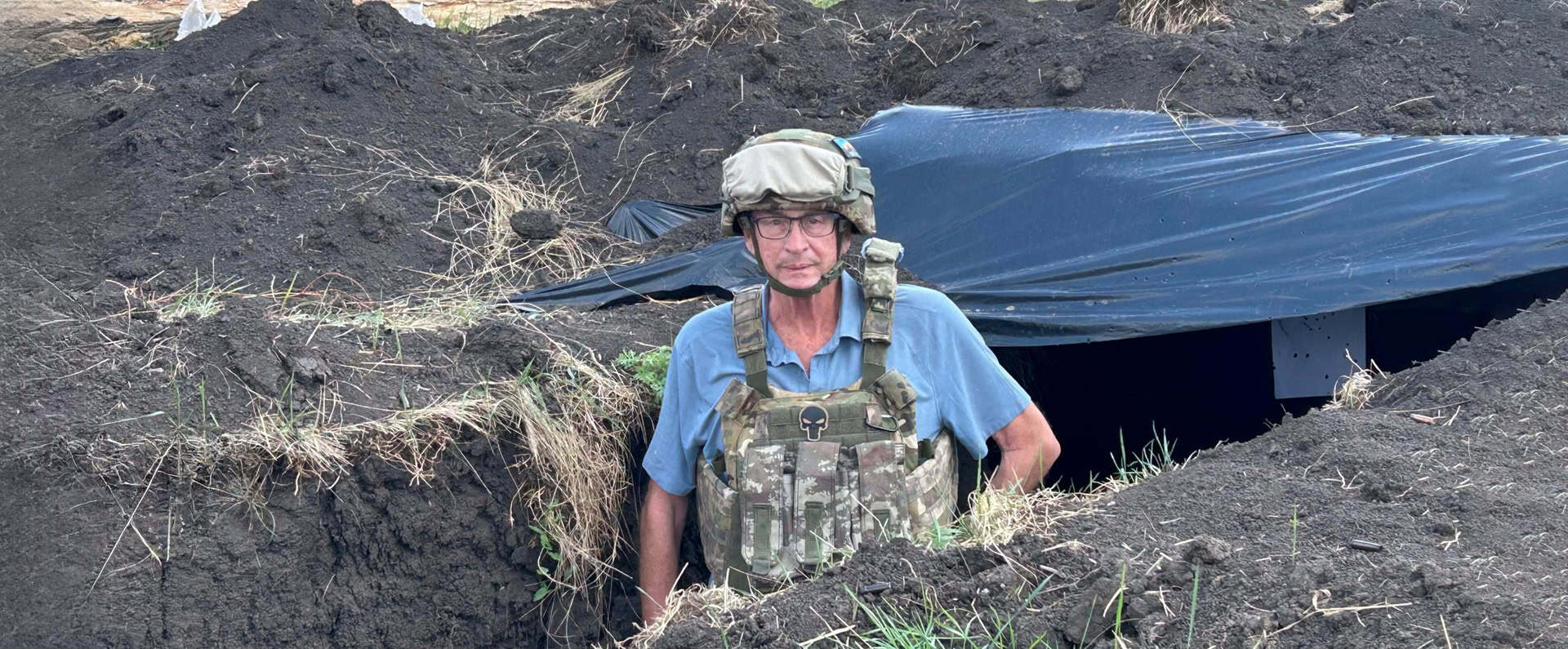
Of the many Ukrainians I have met during my 15 visits to Ukraine over nearly five years, I have not once met a person who has given up. They were bruised, traumatised, anxious, confused and sometimes disappointed, but never hopeless.
That is why I strongly believe that, on the 35th anniversary of the restoration of its independence, and for many years and centuries ahead, Ukraine will prevail and prosper.
Slava Ukraini!
Read this article on KyivPost.com
Read this article on ConservativeHome.com