Published in The Mail on Sunday on 28 June 2026.
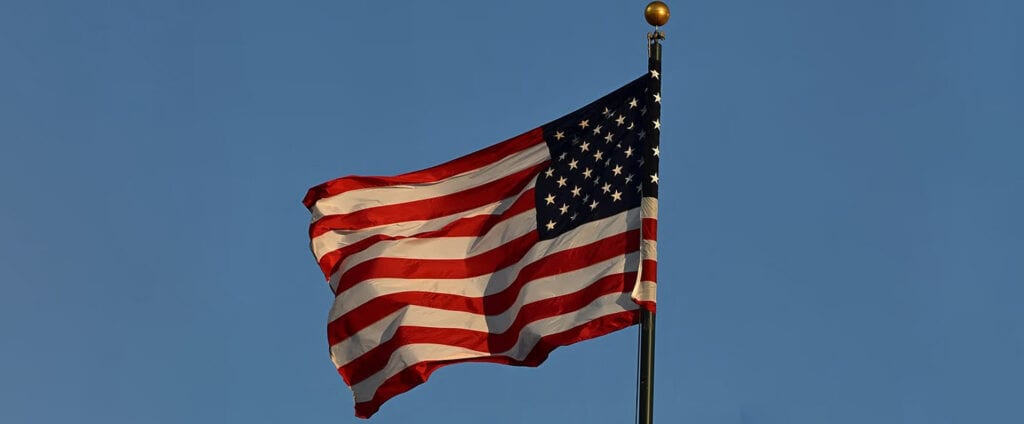
How do you celebrate 250 years of a country? If you’re Donald Trump, for whom 2026 means both two-and-a-half centuries of the US and his own 80th birthday, the answer is UFC Freedom 250.
As you surely know, UFC stands for Ultimate Fighting Championship. Adherents enjoy mixed martial arts – a brutal spectacle combining wrestling, boxing, jiu jitsu and other disciplines.
Though perhaps a near-perfect expression of Trumpian MAGA culture, the event – with fights, a military flypast, thousands of roaring fans, garish hats and plenty of beer – was not to everyone’s taste. But it’s hard think of anything that would be. In fact, Americans are divided over whether there is much to celebrate at all.
In my polling, only half say they are very proud of the US, and one in five say the country has lived up to its founding ideals of liberty and opportunity for all. Republicans are much more likely to agree than Democrats – half of whom believe the US has fallen short or that those ideals were flawed from the beginning.
Minorities often reveal mixed feelings. ‘It hits a little differently for African-Americans, especially how we’ve been treated,’ a man in Missouri said. ‘At the same time, I believe this is the greatest country. It’s bittersweet.’
Most believe the US is unique. But fewer than half think it is a global force for good, and more than one in five young adults believe it never was.
For some, disillusionment is political. They lament the polarised population, misconceived military adventures and the policies and personality of their 47th president.
Others believe America’s history precludes any celebration: ‘How can you discover a land that has indigenous people on it?’ asked one young man in New Mexico. Some told us they were embarrassed to be marking an anniversary with the country in its current state, or to be recognised as an American while abroad.
More often, people’s ambivalence towards this year’s Fourth of July comes from dissatisfaction with their own lives or uncertainty about the future, especially for their children. This shows their waning faith in the American Dream – the idea that with effort, enterprise and persistence, anyone in the US can achieve prosperity and the life they want.
Fewer than a quarter say the American Dream is still alive and achievable, though again Republicans are more than twice as likely than Democrats to think so.
More than a third say it only exists for certain groups, is no longer relevant or never existed at all. Most say the dream is still there but harder to achieve than before.
This is because the old days were simpler and, above all, cheaper.
Many have parents or grandparents who bought houses and raised families on one salary or had a long career in the same firm with a comfortable pension. Now, three in ten younger Americans expect never to afford a home despite good incomes. A key tenet of the American Dream – that each generation will do better than the one before – no longer reflects reality.
Strikingly, those who came from abroad or whose parents did, were often more upbeat. ‘As an immigrant who had to give up my citizenship elsewhere and choose this country, I appreciate the freedoms I have,’ a man in Kansas City told us. ‘There’s an appreciation for what this country affords us.’
Despite their famously can-do attitude, Americans are given to philosophising like this in a way that would feel alien to most Britons. Their talk of freedom might be eccentric to Europeans, but it is deeply felt, not least because their families often came from places with none.
‘The First and Second Amendments,’ answered one man on what made the US different. ‘You have the right to criticise your government and defend yourself.’
Despite a natural suspicion of the state, many Americans look enviously at more generous social provision – especially healthcare – in Canada and Europe (though others point out the unAmerican tax rates for these ‘free’ services).
Despite perhaps wishing life was easier, self-reliance remains crucial. ‘You want to be able to say that you did it,’ a working-class woman told us.
Yet while the upside of success is greater than anywhere else, the downsides of failure feel more extreme, especially if there is no family memory of a country in worse condition. The appetite for risk is greater in those who have less to lose. This also helps explain the appeal of Trump among classes and minorities who would traditionally have aligned with the Democrats.
Some recall the 1976 bicentennial as less complicatedly patriotic. But it came at the end of a time of turmoil: civil rights, assassinations, Vietnam, Watergate and Nixon’s resignation. Americans feared national decline fuelled by energy prices, inflation, domestic division, diminishing international respect and declining faith in leaders and institutions. How things change.
Meanwhile, Americans agree on plenty: they cherish personal freedom, believe opportunity comes from hard work and determination, and they know that whatever their dreams, they’re more likely to make them come true in the US than anywhere else. Even if the President allows fighting on the White House lawn.
See full report and data tables
Read this article on DailyMail.co.uk
DOWNLOAD PDF