
Published in The Mail on Sunday on 25 January 2026.
WHAT DOES IT ALL MEAN? As with so much in politics, and indeed in life, what people think about the latest round of defections from the Tories to Reform depends on what they thought already.
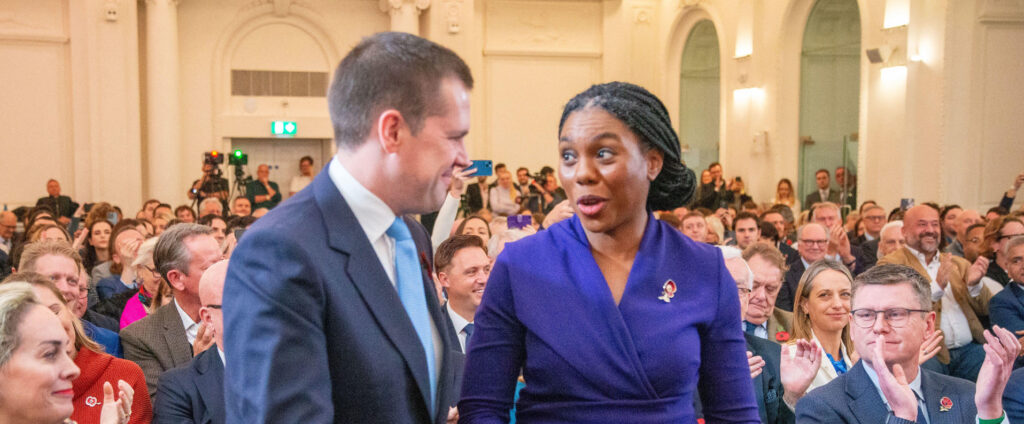
Those who like Kemi Badenoch salute her swift and decisive move to boot Robert Jenrick out of the Conservative Party before he got around to jumping. In my poll, nearly seven in ten Tory-leaning voters say it shows a strong leader determined to show that her party has changed. For the first time, as many people say she would make a better prime minister than Keir Starmer as vice versa. She is also at her highest rating yet in a three-way contest with Nigel Farage, though still in third place.
Meanwhile, Reform backers say the new recruits prove their party has the momentum, and others argue that the days of Tory turmoil are evidently far from over. The idea that the Conservatives still haven’t moved on from infighting and divisions was the prevailing view in my survey.
In fact, voters can see an element of truth in all these positions. They see defectors’ motives as being mixed, at the very best (we’re talking about politicians, after all). People tend to assume that when an MP switches parties, career ambition and sour grapes play at least as big a part as principle and conviction, and Jenrick was no exception. At the same time, Conservative voters in my focus groups this week applauded Badenoch’s tough action (“she’s got balls!”) but complained that she didn’t seem to have her party behind her and recognised Reform’s coup in winning a high-profile convert. They also nodded along with Jenrick as he lamented the ways in which Britain was “broken” and lambasted his former party for its role in the country’s ruin. In other words, Jenrick might be a bounder, but he has a point; Badenoch showed leadership, but it was all grist to the Farage mill. There are risks for Reform, too. In my groups, one of the party’s 2024 voters worried about the insurgent movement being “watered down”. “Don’t take any more Tory has-beens,” warned another.
Call it a score draw, then. But how much does it all matter?
One upshot is that it makes any kind of pre-election pact between Reform and the Tories even more unlikely than it was before. The personal rivalries involved are only one reason why the prospect of such a deal is receding. When I asked voters if they would prefer a Conservative-Reform coalition or a combination of Labour, the Lib Dems and Greens, supporters of the left-wing parties overwhelmingly preferred to be in government with each other, and Reform-leaning voters plumped for an alliance with the Tories. But Conservative voters were less sure, often saying they didn’t know which would be better (or worse). Many Tories are suspicious of Farage. Any such arrangement would need the voters to play ball, and they don’t like to be taken for granted.
Outside Westminster, however, the latest episode of party drama hasn’t changed anybody’s mind because it hasn’t changed anybody’s life. Defections belong to the realm of games and plots – the kind of politics that alienates voters, rather than the kind that affects their world. And there is plenty of the latter kind to be getting on with.
Compared to recent international news, another round of political musical chairs seems petty and irrelevant. Some believe US action in Venezuela was justified, and there is broad support for seizing oil tankers in the Russian shadow fleet and for British troops joining a postwar peacekeeping force in Ukraine. But current global events and their unknowable consequences worry people. American designs on Greenland were once dismissed as the product of President Trump’s bizarre sense of humour. Despite the emergence of a tentative deal on the territory, tensions within NATO have cut through. The combination of all this makes many uneasy. “I feel like we’re on the edge of World War Three,” one woman told us last week.
Closer to home, I found people genuinely frightened about deepfakes and the effect of social media on their children. Voters of all stripes felt governments had been reluctant to take on the tech world, but noted that the sinister capabilities of Elon Musk’s Grok had roused ministers to battle. This, too prompted frustration: if Labour can spring into action against an app, why can’t it show the same sense of urgency over the countless other problems besetting Britain?
Most have given up waiting for any such sense of purpose – whether on migration, crime, growth, welfare or anything else. When I asked voters to pick from a long list of words to describe Starmer, the top choices were “out of his depth”, “out of touch”, “weak”, “indecisive” and “dull”. Fewer and fewer say they are giving Labour the benefit of the doubt, and seven in ten expect the party to be out at the next election. The question is who will replace them.
Whatever the voters made of the spectacle, this month’s defections have provided both the impetus and the opportunity for Badenoch to set out a Conservative position distinct from that of her rivals on the right. That doesn’t mean reverting to the pre-Brexit Tory party, either in policy or personnel. Today’s challenges are different, but one reason for voters’ despair is that nobody seems to know what to do about them. Many are worried or, like Jenrick, angry. But what they really want are answers.
Read this article on DailyMail.co.uk
See the full data tables