Published on ConservativeHome.com and KyivPost.com on 07 August 2026.
In 2012 having visited a firing range in Cyprus I realised that there was a disconnect between the servicemen I had met and the public perception of the health and ability of those in the Forces.
This led to a piece of research which suggested that they were regarded as victims, mostly damaged by their service and not suitable for work in the private sector. As a result, I offered to conduct a study for the Government which I published in 2014 as the Veterans’ Transition Review, setting out recommendations for the better management of transition to civilian life, covering work, health, housing education and welfare.
The Government accepted the recommendations and much of the support veterans receive today comes out of those. I followed up, as asked, with three annual updates commenting on progress and all set out similar themes: slow progress, a failure to get information to those that needed it and the lack of an information campaign to improve the image of Service leavers. I have always felt that the government has been reluctant to apply as much energy as it could while the Forces charity sector remains suboptimal with too many charities in competition with each other.
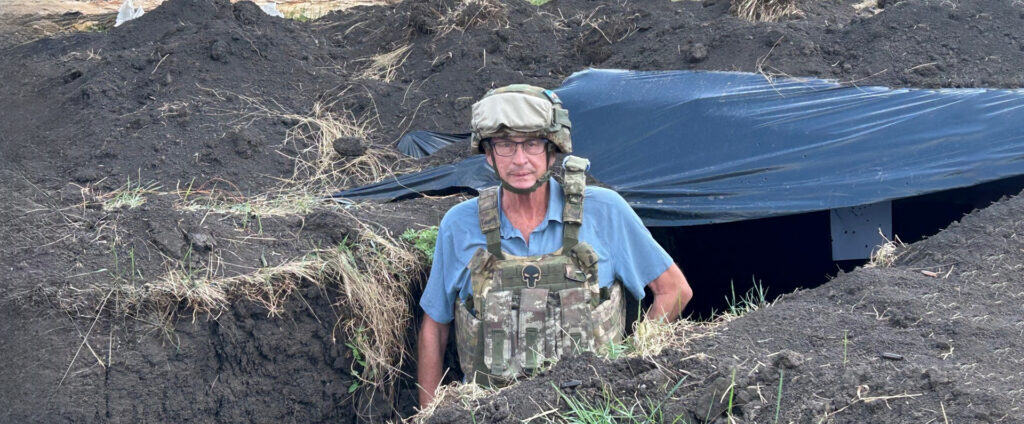
Over the past four years I have visited Ukraine 15 times. I am overawed by their resilience, courage, and innovation in the face of what we believed to be the massive Russian military capability. I have donated money some of which naturally has gone to help those who have suffered and discovered that their new Ministry of Veterans Affairs was making plans for the transition of their service personnel mirroring the measures I had recommended to the UK government 12 years ago. But it’s not just a mirror; it is far more comprehensive and moving faster than anything we have experienced here. For a brief moment, I thought that I could use my previous work on this to help them; instead, we can learn from them.
There are of course significant differences.
The conflicts that were the background to my work took place far abroad and had little direct impact on our daily lives. The Armed Forces, already much diminished, were not seen and few people knew a soldier. It was the time of funeral corteges though Royal Wootton Basset, and the brilliant Help for Heroes campaign which fed the public’s view of damaged people. In stark contrast, the Ukrainians are fighting an existential war on their home soil, everybody is involved and the Russians, without any moral code seem eager to break every law, written and unwritten in doing as much harm as possible. It is a brutal war, at home.
It is worth noting some differences in scale.
The Ukrainians have about 1 million men and women in the fight; at the time of my review our Armed Forces numbered 160,000. The level of injuries is staggering, one estimate suggesting that 400,000 have been injured over the course of the war. Once again, at the time of my review, only 8 per cent of Service leavers were not healthy and over the course of the Iraq and Afghanistan operations we had 222 amputees. This number for the Ukrainians is in the thousands. Thus, the Ukrainians face a massive challenge, at a time when the government’s financial resources are aimed at the nation’s fight for survival; that they are addressing the needs of veterans so seriously is impressive.
The Ukrainian Parliament has in hand a draft law covering transition – no reluctance here – driving from the centre every element needed for successful resettlement. Judging by their determination, it will happen and their Ministry for Veterans Affairs will deliver. Most of their military left their jobs, willingly or called-up, leaving vacancies behind. Interestingly, because people change in war, 50 per cent don’t want to go back to the same job. Thus, a lot of people will need to find work.
Over 100 major companies have already signed up to a set of principles to help them to do so, with involvement at CEO level. Something that I could not persuade the UK government to do, that is to tilt procurement in favour of veteran managed businesses, has been agreed, encouraging entrepreneurs, and helping them raise finance. There will be financial support for companies to adapt workplaces. I note their intent to prevent stereotyping of veterans while in the UK every portrayal of veterans on the screen portrays them as damaged goods. I am particularly impressed by their legislation which allows certain types of amputees to return to military service, including combat units. Some amputee veterans I have met in both the UK and Ukraine are extraordinarily resilient, indeed tougher than before their injury, and returning to the Forces would be beneficial for their mental health and make them feel valued, at the same time removing their dependence on the state.
An important area where I feel we have not been successful is getting the message to all those that need help that the help is available. I am aware of a great deal of anecdotal evidence of veterans struggling and simply not knowing that they can be helped. We do after all have a lot of wealthy charities as well a special arrangements for those with mental health problems, or are amputees. People in London might think there is adequate provision and all is rosy but at ground level there is confusion and a lack of information. It appears that the Ukrainians are intent on preventing this, obliging every agency that is in the mix, charities, government departments at every level and society organisations to work together.
Finally, I have real sense that throughout their plans they come from a position that all veterans are different; they are not a homogenous bunch which can be catered for uniformly. They do, of course, have many women fighting on the front line – many of whom I have interviewed personally – and are making special provision for them, which we in general do not and should.
I made the point during my Review that successful transition to civilian life at the end of military service helped recruitment, overcoming the perception of being damaged and dumped, and that investment would pay dividends. We have not really got there yet.
But the Ukrainians, in the middle of a brutal war that has drained their economy and manpower, recognise its importance and have outrun us. They are to be admired and supported through all means necessary.